
CF Rehabilitation Gardens
Garden of Dreams — the first therapeutic square
In 2017, my first therapeutic space — “Garden of Dreams” — was created on the grounds of the Romodanov Institute of Neurosurgery of the National Academy of Medical Sciences of Ukraine.
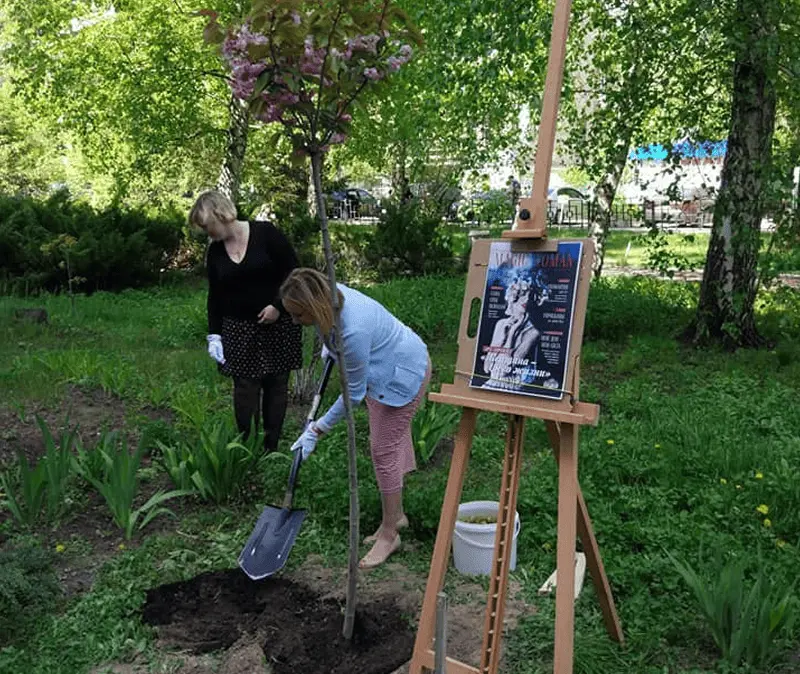
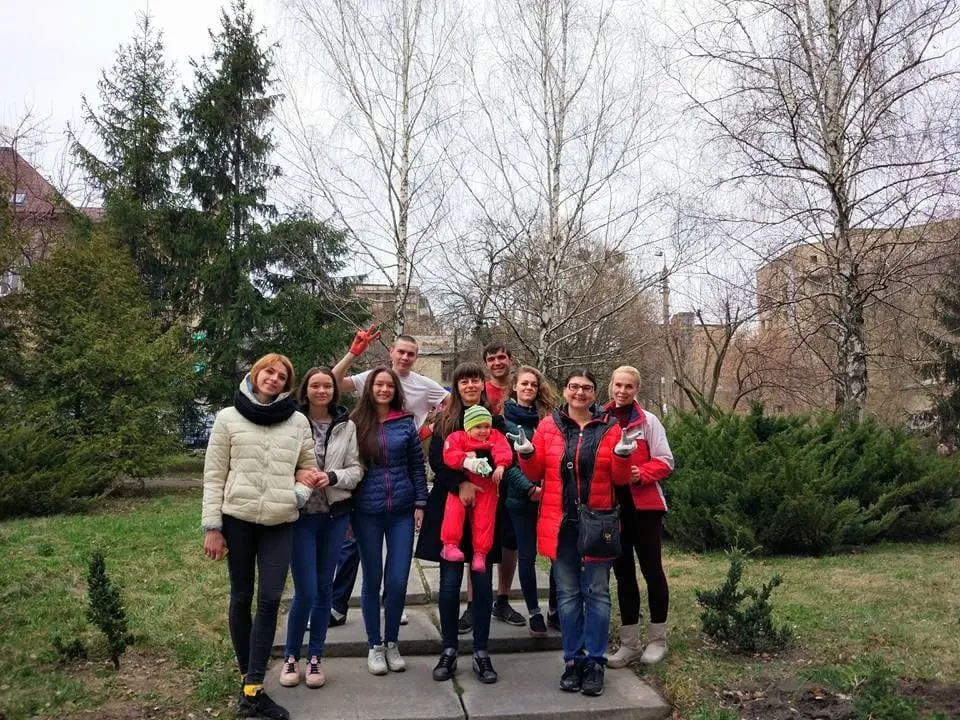
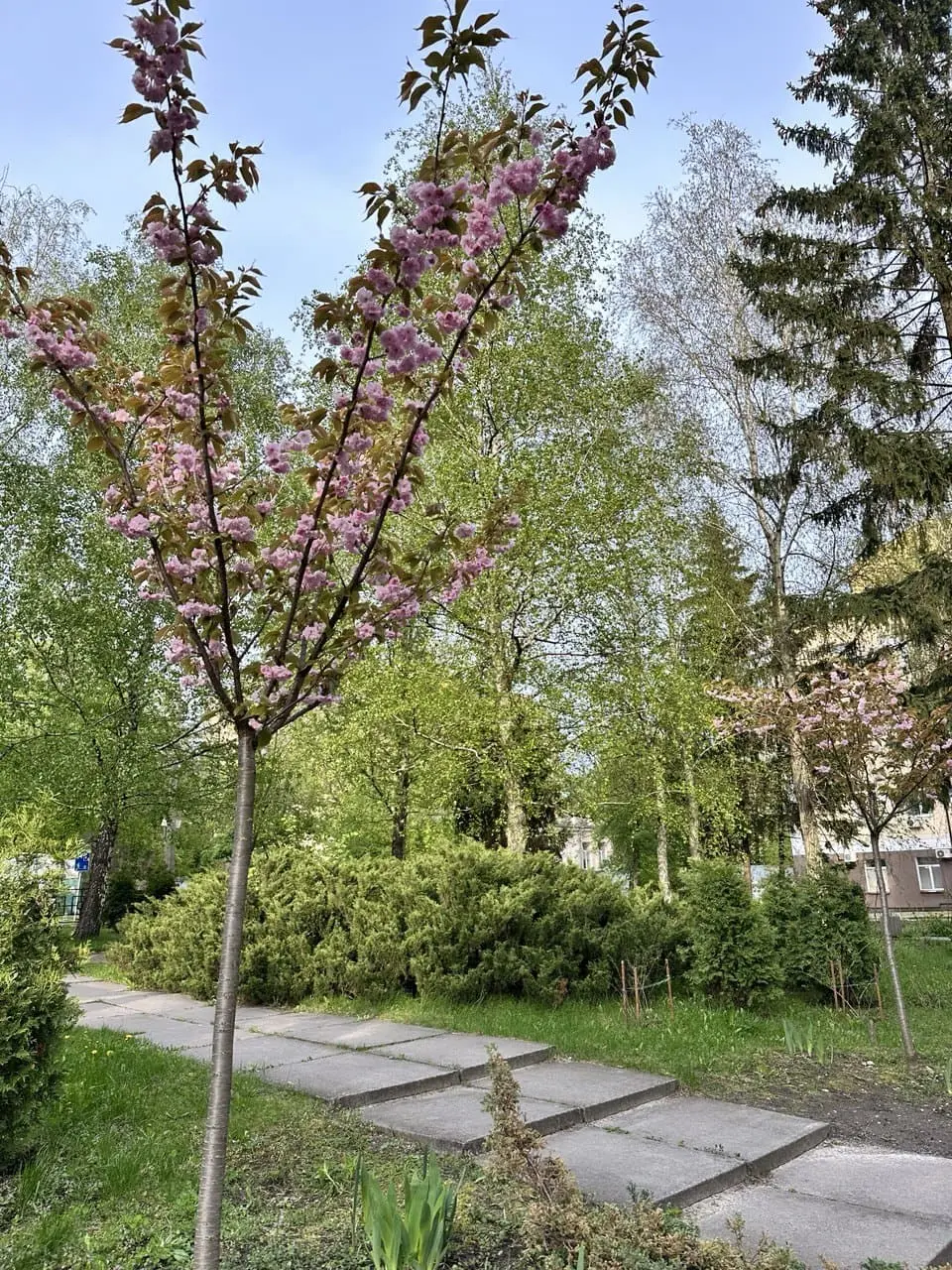
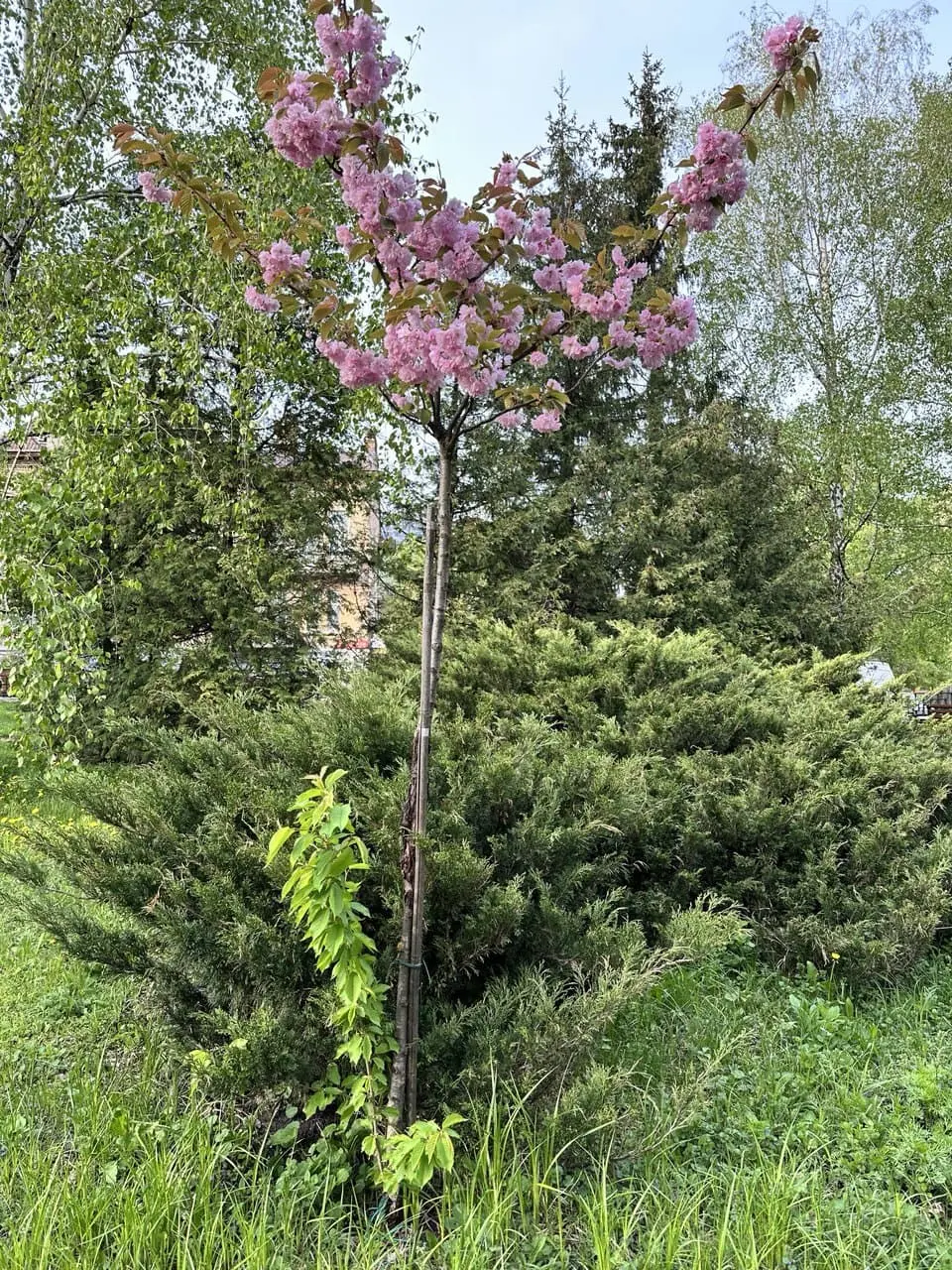
The project was implemented during the Year of Japan in Ukraine with the assistance of the Ukraine-Japan Center and the support of Kateryna Lohovska. The planting of cherry blossoms (sakura) was not only a symbolic gesture but a professionally reasoned decision: in the fields of neurosurgery and neurology, it has been proven that visual contact with nature positively affects neurophysiological processes — reducing stress levels, aiding emotional regulation, and supporting cognitive recovery.
“Garden of Dreams” became the first step of my systematic path in creating therapeutic landscapes — a space where personal trauma was transformed into a professional mission.
In the “Garden of Dreams” project, implemented on the grounds of the Romodanov Institute of Neurosurgery of the National Academy of Medical Sciences of Ukraine, key professional competencies in the field of therapeutic landscape design were applied and established:
1. Evidence-Based Design
- Integration of scientific data regarding the impact of the natural environment on neurophysiological processes;
- Consideration of the specifics of neurosurgical and neurological contexts;
- Formation of visual accents for patients with limited mobility (view from the window as a therapeutic resource).
2. Spatial Analysis of the Medical Environment
- Evaluation of sightlines from the windows of the intensive care unit and the operating block;
- Definition of the compositional axis and key focal points;
- Work with scale and perspective tailored for perception from upper floors.
3. Biophilic and Sensory Design
- Selection of plants with seasonal dynamics (sakura as a short-lived but powerful sensory phenomenon);
- Creation of color and texture harmony;
- Formation of an emotionally positive visual environment.
4. Project Management and Cross-Sector Collaboration
- Coordination with the administration of the medical institution;
- Interaction with partners, specifically the Ukraine-Japan Center;
- Organization of the planting and maintenance process.
5. Therapeutic Conceptualization of Space
- Transformation of personal experience of trauma into a professional model of support;
- Formation of the landscape as a psycho-emotional regulator;
- Embedding a symbolic layer (sakura — the cycle of renewal, the briefness of blooming as a reminder of the value of life).
6. Social Leadership
- Initiation of the first square as a prototype for future systemic projects;
- Mobilization of family, colleagues, and partners;
- Formation of a personal professional identity in the field of therapeutic gardening.


Help us create more healing spaces
Become a project ambassador
Together we are strong. Thank you for your support!
Details for donation in UAH
Recipient name: БО БФ РЕАБІЛІТАЦІЙНІ САДИ
Recipient code: 45171218
Recipient account: UA643052990000026006040127360
Bank name: JSC CB “PRIVATBANK”
Details for donation in USD
Company Name: CHARITY ORGANIZATION “CHARITY FUND “REHABILITATION GARDENS” (Charity Organization)
IBAN Code: UA93 305299 00000 26002010123031
Name of the bank: JSC CB “PRIVATBANK”, 1D HRUSHEVSKOHO STR., KYIV, 01001, UKRAINE
Bank SWIFT Code: PBANUA2X
Company address: 8 NOVA STR., VYSHNIAKY, BORODIANSKYI DISTR., KYIV REG., 07824, UKRAINE
Correspondent banks
1. Account in the correspondent bank: 001-1-000080
SWIFT Code of the correspondent bank: CHASUS33
Correspondent bank: JP Morgan Chase Bank, New York ,USA
2. Account in the correspondent bank: 890-0085-754
SWIFT Code of the correspondent bank: IRVT US 3N
Correspondent bank: The Bank of New York Mellon, New York, USA
3. Account in the correspondent bank: 36445343
SWIFT Code of the correspondent bank: CITI US 33
Correspondent bank: Citibank N.A., NEW YORK, USA
Details for donation in EUR
Company Name: CHARITY ORGANIZATION “CHARITY FUND “REHABILITATION GARDENS” (Charity Organization)
IBAN Code: UA23 305299 00000 26001000135847
Name of the bank: JSC CB “PRIVATBANK”, 1D HRUSHEVSKOHO STR., KYIV, 01001, UKRAINE
Bank SWIFT Code: PBANUA2X
Company address: 8 NOVA STR., VYSHNIAKY, BORODIANSKYI DISTR., KYIV REG., 07824, UKRAINE
Correspondent banks
1. Account in the correspondent bank: 400886700401
SWIFT Code of the correspondent bank: COBADEFF
Correspondent bank: Commerzbank AG, Frankfurt am Main, Germany
2. Account in the correspondent bank: 6231605145
SWIFT Code of the correspondent bank: CHASDEFX
Correspondent bank: J.P.MORGAN AG, FRANKFURT AM MAIN, GERMANY
3. Account in the correspondent bank: 5184099710, IBAN DE39503303005184099710
SWIFT Code of the correspondent bank: IRVTDEFX
Correspondent bank: THE BANK OF NEW YORK MELLON, FRANKFURT AM MAIN
4. Account in the correspondent bank: 0042997188, IBAN IE96CITI99005142997188
SWIFT Code of the correspondent bank: CITIIE2X
Correspondent bank: CITIBANK EUROPE PLC